Posted on October 28, 2026
Completing Hong Kong company registration is an important milestone, but incorporation is only the beginning of building a properly organised business. After receiving the incorporation documents, business owners must prepare their company records, establish suitable administrative arrangements, organise financial processes and understand their ongoing statutory obligations.
For overseas entrepreneurs, startups and international businesses, the first three months can be especially important. Decisions made during this period can influence how efficiently the company handles customer payments, financial records, official correspondence and future compliance requirements.
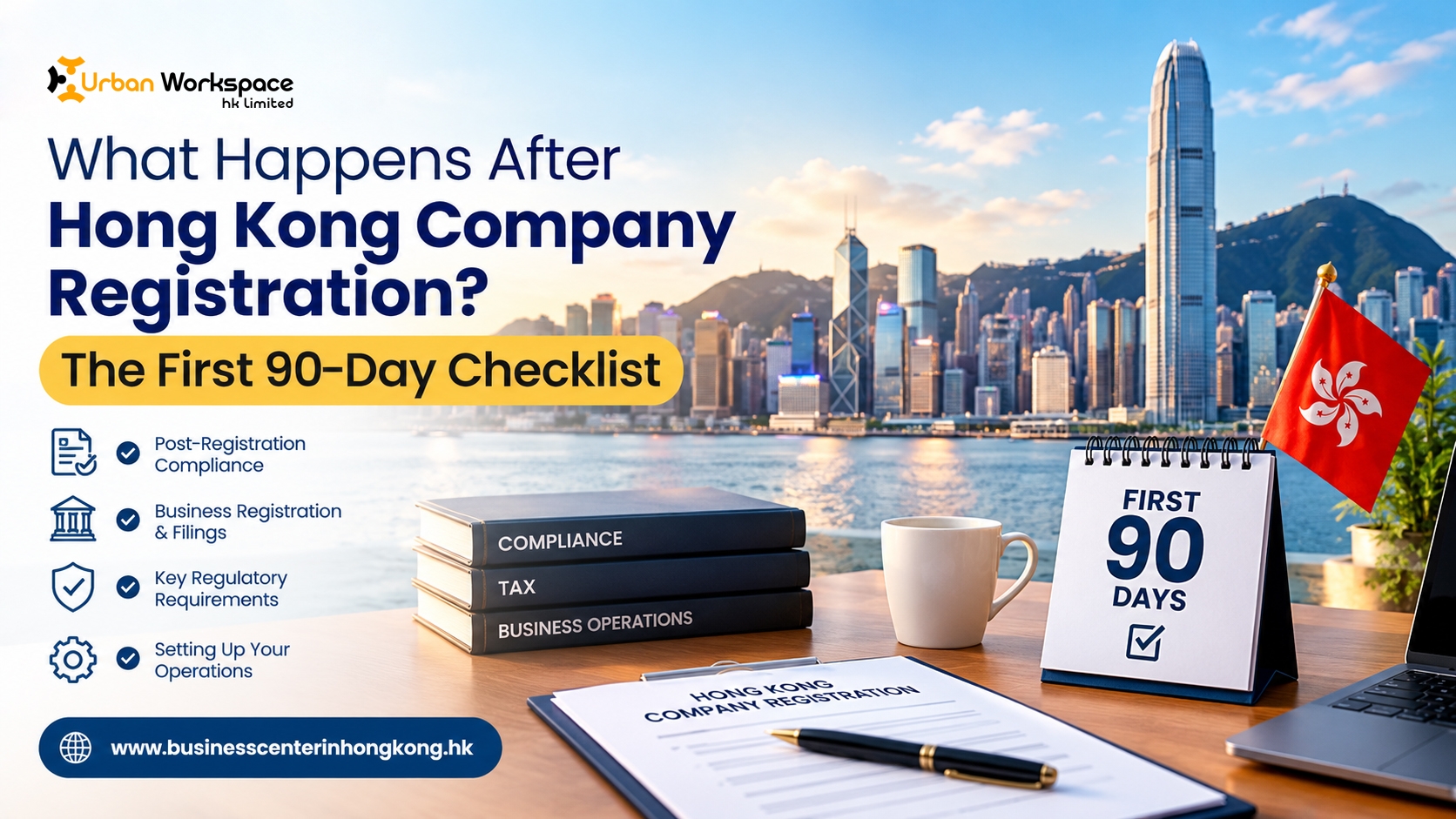
This guide explains what to do after Hong Kong company incorporation through a practical 90-day checklist. Whether you have established a new trading company, consultancy, technology business or international service company, this roadmap can help you plan the next steps with greater confidence.
Once a company has been incorporated, its directors should move from the registration stage to the operational stage. This means making sure that the business can maintain its records, communicate with the relevant authorities, manage money and prepare for its legal and tax responsibilities.
The exact steps depend on the company's structure, business activities, ownership, transaction volume and whether it has employees or operates internationally. However, most newly incorporated businesses should review the following areas:
A company does not necessarily need to complete every operational activity within a fixed number of days. The purpose of a 90-day checklist is to establish priorities, identify outstanding tasks and avoid leaving important administrative matters until the last minute.
The first two weeks should focus on creating a reliable administrative foundation. Before investing heavily in marketing, hiring or expansion, confirm that the company's essential documents and responsibilities are properly organised.
Begin by collecting and securely storing the company's incorporation documents. Depending on the company's circumstances, these may include the Certificate of Incorporation, Business Registration Certificate, articles of association, details of directors and shareholders, and records relating to share allotments or ownership.
Create a secure digital folder for company documents and maintain a clear record of who can access them. Keep copies available for legitimate administrative purposes, including professional advisers, financial institutions and business partners where appropriate.
Well-organised Hong Kong company documents can make future verification, corporate administration and financial reviews easier.
A Hong Kong company must satisfy the applicable statutory requirements for a company secretary. For a private company, the secretary must meet the relevant eligibility rules. Where the secretary is an individual, the Companies Ordinance generally requires that person to ordinarily reside in Hong Kong. Where a corporate secretary is appointed, its registered or principal office must be in Hong Kong.
Confirm that the appointment is in place, responsibilities are understood and a reliable process exists for maintaining statutory records and handling required filings.
Professional Hong Kong company secretary services may help businesses manage corporate records, monitor filing obligations and coordinate routine company administration. The directors remain responsible for ensuring that the company meets its legal obligations.
A company incorporated in Hong Kong needs a registered office address in Hong Kong. Confirm that the address recorded for the company is correct and that arrangements are in place for receiving official correspondence.
If your business does not require a traditional office from the beginning, investigate whether a suitable Hong Kong business address, registered office service or virtual office Hong Kong arrangement meets your administrative and operational needs.
Before choosing a provider, check exactly which services are included. A business mailing address, a registered office arrangement and permission to use premises for particular activities are not automatically the same thing. Confirm that the proposed service is appropriate for your company and its intended use.
Record your company's incorporation date, business registration details, relevant renewal dates and anticipated reporting obligations. Add reminders for statutory filings, accounting reviews and any tax correspondence that requires action.
Do not assume that all obligations fall due within the first 90 days. For example, the first annual return of a local private company is generally due within 42 days after the first anniversary of incorporation, rather than 90 days after registration. Other obligations may have different triggers and deadlines.
Check the requirements that apply to your particular company using the Hong Kong Companies Registry and seek professional advice where necessary.
Once the basic company administration is organised, focus on how the business will receive payments, pay suppliers and maintain reliable financial records. These arrangements can take time, so early preparation is useful even if the company has not started trading.
Opening a Hong Kong business bank account is a common priority after company incorporation. However, incorporation does not automatically guarantee bank account approval. Financial institutions conduct their own customer due diligence and assess each application according to their requirements and risk policies.
Prepare a clear explanation of the company's business model, expected customers, suppliers, transaction types and source of funds. Depending on the institution and circumstances, supporting information may include:
Requirements vary between banks and other financial service providers. Some may request additional documentation or an interview. Avoid relying on promises of guaranteed approval or a fixed opening timeline.
A complete and consistent application can help the review process, but the final decision remains with the financial institution.
Set up a simple process for recording all business income and expenditure from the start. Waiting until the business becomes profitable can make it harder to reconstruct earlier transactions and distinguish business expenses from personal spending.
Your initial Hong Kong bookkeeping services plan should cover:
Choose a recordkeeping method that matches the size and complexity of your business. A small consultancy may have fewer transactions than an international trading company, but both benefit from complete and consistently maintained financial records.
Prepare a standard invoice format, payment terms and a procedure for tracking unpaid customer balances. Decide who is authorised to issue invoices, approve expenses and make payments.
If your business works with international customers, confirm how it will quote prices, manage different currencies and document cross-border transactions. Keep signed agreements and supporting records alongside the relevant invoices.
These procedures help build an organised financial workflow and provide useful information for future Hong Kong accounting services, tax reviews and business planning.
During the second month, shift attention towards practical operations. Your company should be moving towards a repeatable way of handling customers, suppliers, correspondence and day-to-day responsibilities.
Write a clear description of what your company sells, who it serves and how it earns revenue. Identify your main customer segments, expected suppliers and the markets in which you plan to operate.
This exercise helps align your business plan, banking information, contracts, accounting categories and operational priorities. It also helps identify whether particular activities may require additional licences, permits or regulatory review.
Do not assume that company incorporation alone authorises every type of business activity. Check the rules relevant to your specific industry before starting regulated operations.
A professional business presence can help customers and suppliers understand what your company does and how to contact it. Depending on your business model, this may include a website, a company email address, clear service descriptions and consistent contact information.
If you are establishing an international operation, consider whether virtual office services in Hong Kong or a serviced office Hong Kong arrangement would suit your actual needs. Virtual office packages may offer different combinations of business address facilities, mail handling and meeting room access.
Compare the terms carefully. Confirm the permitted uses of the address, how mail is handled, whether meeting rooms are included and whether additional charges apply. Make sure any arrangement is suitable for your business and any relevant regulatory requirements.
Prepare standard contracts or engagement terms for customers, suppliers and contractors. Make responsibilities clear, including payment arrangements, delivery expectations, confidentiality and procedures for resolving disagreements.
Even a small company benefits from documenting who can approve expenses, sign agreements, access financial records and respond to official correspondence. If more than one person manages the company, clear responsibilities reduce confusion.
If you plan to hire employees in Hong Kong, identify the employment, payroll, tax reporting and other applicable obligations before the first employee starts work. Requirements depend on the employment arrangement and the company's circumstances.
Where relevant, investigate applicable obligations under Hong Kong employment law, including the Mandatory Provident Fund system and employer reporting requirements. Confirm current requirements with the relevant authorities or a qualified adviser.
Businesses without employees can mark this step as not currently applicable, but should revisit it before recruiting staff.
The final month of the first 90 days should focus on reviewing what has been completed, identifying missing information and creating a sustainable routine for company administration.
Review the company's invoices, expenses, receipts, payment records and bank transactions. Check whether transactions have been recorded consistently and whether important supporting documents are missing.
If the business has started trading, consider a regular bookkeeping schedule and periodic financial reports. These can help you understand revenue, operating costs, outstanding invoices and available cash.
A professional accountant may help assess your recordkeeping system, prepare financial information and identify areas that require attention. The precise services needed will depend on the company's activities, reporting requirements and financial complexity.
Incorporation does not remove the need to understand the company's potential tax obligations. Review how your business activities may be treated for Hong Kong tax purposes and establish a process for handling tax correspondence and maintaining supporting records.
Hong Kong profits tax generally concerns assessable profits arising in or derived from Hong Kong from a trade, profession or business carried on in Hong Kong, subject to the applicable rules. The tax treatment of an individual company depends on its facts and the relevant legislation.
Do not assume that a company has no tax responsibilities simply because it has not made a profit, has limited transactions or has overseas customers. Equally, do not assume that every overseas transaction is automatically taxable or exempt. Seek advice based on the actual facts.
For official guidance, consult the Hong Kong Inland Revenue Department. Keep an organised record of relevant income, expenses, contracts and supporting evidence so that tax matters can be reviewed properly.
A local private company generally has to file an annual return with the Companies Registry within 42 days after the anniversary of its incorporation, except in the year of incorporation. For the first annual return, this normally means the filing obligation arises around the first anniversary, not within the first 90 days.
Other company types and specific circumstances can have different reporting rules. In addition, certain changes in company particulars may need to be reported separately rather than waiting for the next annual return.
Create reminders well in advance and check the requirements applicable to your entity. Late filing can result in higher fees and other consequences.
Use the official Companies Registry guidance on annual returns for local private companies to verify the applicable filing period.
At the end of the first 90 days, review your operational readiness. You do not need to have achieved every sales target by this point. Instead, focus on whether your company has the administrative structure and financial visibility needed to move forward.
Ask yourself the following questions:
If several answers are no, prioritise those gaps before adding unnecessary administrative complexity or expanding your operations.
A new company's compliance requirements depend on its structure, business activities and circumstances. The following overview highlights areas that directors should investigate rather than treating every item as automatically applicable to every company.
Ensure that the company meets its company secretary requirements and maintains the relevant statutory records. Changes in directors, company secretary, registered office address or other company particulars may trigger separate filing obligations.
Keep the Business Registration Certificate and related records organised. Check the certificate's validity and the applicable renewal requirements with the relevant authority. The correct renewal procedure and timing depend on the certificate and circumstances.
Maintain records that support the company's transactions and financial position. The nature and extent of the company's accounting, financial statement and audit obligations should be assessed under the applicable rules and the company's circumstances.
Monitor correspondence from the Inland Revenue Department and review the company's applicable profits tax, employer reporting and other tax-related obligations. Filing dates and requirements should be verified from the relevant notice and official guidance.
Keep the annual return deadline on your calendar and do not confuse it with other statutory notifications. A company may need to report certain changes separately and within their own prescribed periods.
For reliable Hong Kong company compliance, use official guidance and qualified professional advice instead of relying solely on generic online checklists.
Many early-stage problems are not caused by the incorporation process itself. They arise when business owners assume that registration automatically completes every administrative or operational requirement.
Company registration establishes the legal entity, but the company may still need to arrange its records, banking, accounting, contracts and compliance processes. Make a checklist of the tasks relevant to your particular business.
Missing receipts, incomplete invoices and unclear transfers can become harder to resolve over time. Record transactions consistently from the beginning, even when the business is small.
A certificate of incorporation does not guarantee that a bank will approve an account. Financial institutions make their own decisions based on their policies, due diligence and the applicant's information. Prepare accurate documents and realistic business explanations.
Before purchasing virtual office services in Hong Kong, confirm whether the service covers the registered office function, mail handling or other facilities you require. Do not assume every business address package is suitable for every legal or commercial use.
Do not rely on memory or assume that all filing dates are based on the end of the calendar year. Record deadlines using official guidance and set reminders ahead of time.
A company's tax and financial reporting position depends on applicable legislation and its individual circumstances. Seek qualified advice where necessary rather than making assumptions based on the company's size, location of customers or current profitability alone.
Entrepreneurs who have just completed Hong Kong company registration may not need a full traditional office immediately. Depending on their business model, they may benefit from selected administrative and workspace services while building their operations.
A suitable Hong Kong business centre may offer services such as:
These services are not interchangeable, and the availability of each service depends on the provider. Confirm what is included, what costs extra and whether the arrangement suits your company's intended use.
A business centre can support your working arrangements, but it does not replace the company's directors, statutory responsibilities, professional accounting advice or independent legal obligations.
Before selecting a provider, identify your actual needs. A company operating remotely may prioritise a reliable business address and correspondence handling. A consultancy meeting clients regularly may value meeting rooms. A growing team may need a serviced office or additional workspace.
Compare service scope, contract terms, privacy arrangements, additional fees and flexibility before making a decision. Choosing services based on genuine operational requirements can help keep early-stage costs manageable.
Start by organising your incorporation documents, confirming your company secretary and registered office arrangements, creating a compliance calendar and establishing a process for financial recordkeeping. Your next priorities will depend on the company's activities and plans.
You can prepare and submit an application after incorporation, subject to the bank's process. However, approval is not automatic. The financial institution may request identification, ownership information, business details, source-of-funds evidence and other supporting documents.
Yes. A Hong Kong private company must have a company secretary who meets the applicable statutory requirements. The rules differ depending on whether the secretary is an individual or a corporate entity.
Yes. A Hong Kong-incorporated company must maintain a registered office address in Hong Kong. Before using a business centre or virtual office service, confirm that the arrangement is suitable for this purpose and that the address information is properly maintained.
A local private company generally files its first annual return within 42 days after the first anniversary of its incorporation. The applicable rules can differ for other company types, so check the Companies Registry guidance for your entity.
Every company should establish appropriate financial recordkeeping processes. Whether it needs outsourced bookkeeping, an accountant or more extensive accounting support depends on its transactions, reporting obligations, complexity and internal resources.
The answer depends on the company's circumstances and applicable tax requirements. Having no revenue does not automatically mean that every reporting or filing obligation disappears. Review tax correspondence and seek professional advice if the company's position is unclear.
A virtual office may be suitable if its services and permitted uses meet your company's needs. Check whether the package includes a registered office arrangement, mail handling, meeting room access or other facilities. Do not assume that every package includes all these services.
Keep your incorporation and business registration documents, company records, contracts, invoices, receipts, bank records, expense evidence and relevant official correspondence. Additional records may be needed depending on your activities, employees and tax position.
You can establish many of the necessary systems during the first 90 days, but not every statutory obligation becomes due during this period. Some deadlines arise later, while certain changes or activities may trigger earlier requirements. Maintain a calendar based on your company's actual obligations.
The first 90 days after Hong Kong company registration are an opportunity to turn a newly incorporated entity into an organised, operational business. By preparing company documents, confirming administrative arrangements, organising financial records and reviewing relevant compliance requirements, business owners can reduce avoidable confusion and plan their next steps more effectively.
There is no single checklist that fits every company. A trading business, an overseas consultancy and a technology startup may have different banking, workspace, accounting and regulatory needs. Use this roadmap as a starting point, then tailor it to your actual business activities.
If you are exploring Hong Kong business centre services, virtual office solutions, registered office arrangements or workspace options, compare providers carefully and choose services that match your operational requirements.
A well-organised start can make it easier to manage daily responsibilities, maintain reliable records and prepare for sustainable business growth in Hong Kong.
This article provides general informational guidance and is not legal, accounting or tax advice. Requirements may vary according to the company's structure, activities and circumstances. Verify current obligations with the relevant Hong Kong authorities and obtain professional advice where appropriate.







Trusted by entrepreneurs, startups, SMEs, and international companies for Hong Kong company formation, virtual office solutions, registered business address, company secretary services, and ongoing business support.

Business Center in Hong Kong made our Hong Kong company registration process simple and stress-free. Their consultants handled everything professionally, from documentation to incorporation. The communication was excellent, and our company was established faster than expected.

We selected their Virtual Office in Hong Kong package and couldn't be happier. The prestigious business address, professional mail handling, and responsive customer support have helped us build credibility with our international clients.

Their team provided outstanding assistance with company incorporation, company secretary services, and annual compliance. Every step was transparent, professional, and completed on time. Highly recommended for overseas entrepreneurs.

We were looking for reliable business setup services in Hong Kong, and this team exceeded our expectations. Their knowledge of local regulations and quick responses made the entire process smooth and efficient.

We've been using their registered office address and company secretary services for over two years. Everything is managed professionally, allowing us to focus entirely on growing our international business.

Excellent service from start to finish. From Hong Kong business registration to ongoing compliance support, every interaction has been professional, transparent, and reliable. We confidently recommend Business Center in Hong Kong.